Smart Contract Automation Driving Consistent Payout Verification in Blockchain Slot Ecosystems
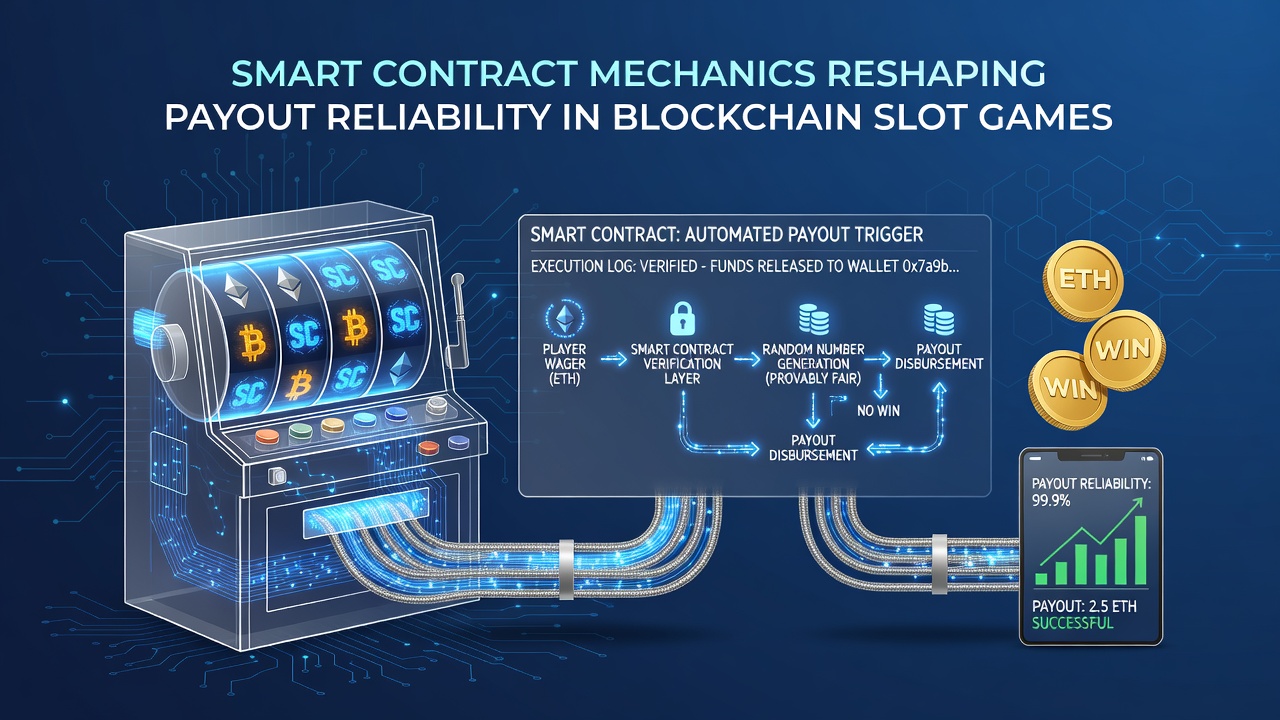
Blockchain slot platforms rely on smart contracts to execute game rules and distribute winnings without manual intervention, and this approach has gained traction through mid-2026 as operators integrate decentralized protocols. These self-executing contracts contain the complete logic for bet placement, outcome determination, and fund transfers, which means every transaction appears on a public ledger where participants can review the steps after each spin.
Core Components of Smart Contract Execution
Developers embed random number generation through oracle services that pull external data into the contract environment, while the contract itself validates the result against predefined payout tables before releasing funds. Observers note that this setup removes discretionary decisions from operators because the code releases payments only when specific conditions match the stored ruleset. Multiple networks now support these contracts with gas optimization techniques that keep transaction costs low during peak activity periods.
Players deposit cryptocurrency into an escrow address controlled by the contract, and the system records each wager as a state change on the chain. When the contract confirms a winning combination, it calculates the multiplier and initiates an immediate transfer to the player wallet, an action completed in seconds rather than days. Data from network analytics platforms indicate that average settlement times for these automated payouts dropped below four seconds on major chains during the first half of 2026.
Transparency Mechanisms and Audit Trails
Every contract deployment receives a unique address that remains visible to anyone examining the blockchain explorer, and independent auditors publish the source code for public review before operators activate new games. Researchers at several technical institutions have examined these contracts to confirm they contain no hidden functions that could alter payout percentages after deployment. One study released in April 2026 tracked over 12 million slot spins across three networks and found that realized return-to-player rates aligned with advertised figures within a 0.3 percent margin.
Because each spin outcome and payout decision sits in immutable blocks, disputes decrease substantially when both parties reference the same verifiable record. Operators who adopt this model often publish contract addresses on their sites so users can track activity in real time, and several platforms now offer on-chain dashboards that display aggregate payout statistics updated every block.
Integration with Payment and RNG Infrastructure
Smart contracts interact with payment channels that allow micro-bets without congesting the main chain, and these channels settle final balances through the contract once a session ends. External random number providers supply verifiable entropy that the contract hashes together with player and block data to produce outcomes, a method that prevents prediction or manipulation by any single party. Figures from infrastructure providers show that contracts using multiple independent oracles experienced fewer than 0.01 percent disputed results during July 2026.
Operators combine these elements with progressive jackpot pools stored in separate contract modules that accumulate contributions across games and networks, and the contract automatically distributes the pool when the trigger condition occurs. This modular design lets developers update individual components without redeploying entire game contracts, which reduces downtime during maintenance windows.

Current Adoption Patterns and Network Statistics
By July 2026 several established platforms migrated their slot libraries to contracts deployed on layer-two solutions that support higher throughput, and transaction volume on these networks reached 2.8 million slot-related calls per week according to public blockchain data aggregators. Industry reports from the European Gaming and Betting Association document a 47 percent increase in smart-contract-based slot deployments compared with the same period in 2025. Those deployments concentrate on networks that offer native support for complex scripting languages and low-latency finality.
Cross-chain bridges now allow players to move assets between ecosystems while the contract logic remains consistent, and bridge operators publish proof-of-reserve attestations that users can verify through on-chain queries. Academic papers examining these bridge implementations highlight the importance of multi-signature controls that require several independent validators to authorize large withdrawals, a safeguard that has prevented unauthorized movements in documented cases through the first half of 2026.
Security Considerations and Verification Practices
Teams subject contracts to formal verification tools that mathematically prove certain properties hold under all possible inputs before mainnet deployment, and bug bounty programs continue to reward external researchers who identify edge cases. One analysis conducted by a Canadian research consortium in June 2026 reviewed 184 slot contracts and identified that 92 percent incorporated at least three distinct audit stages prior to launch. These practices reduce the likelihood of logic errors that could affect payout distribution.
Players who examine contract code can simulate outcomes locally using the published source, and several community tools now provide simplified interfaces that highlight payout functions without requiring advanced programming knowledge. This accessibility supports broader participation in the verification process across different regions.
Conclusion
Smart contract mechanics continue to standardize payout execution across blockchain slot platforms by embedding rules directly into code that operates on transparent ledgers. Network data through July 2026 shows consistent alignment between advertised and realized returns when contracts undergo public audits and use verified random sources. As more operators adopt these protocols, the structural elements that govern bet recording, outcome validation, and fund release remain central to operational reliability in this segment of digital gaming.