Blockchain Integration in Esports Wagering: Verification Protocols Across Borders
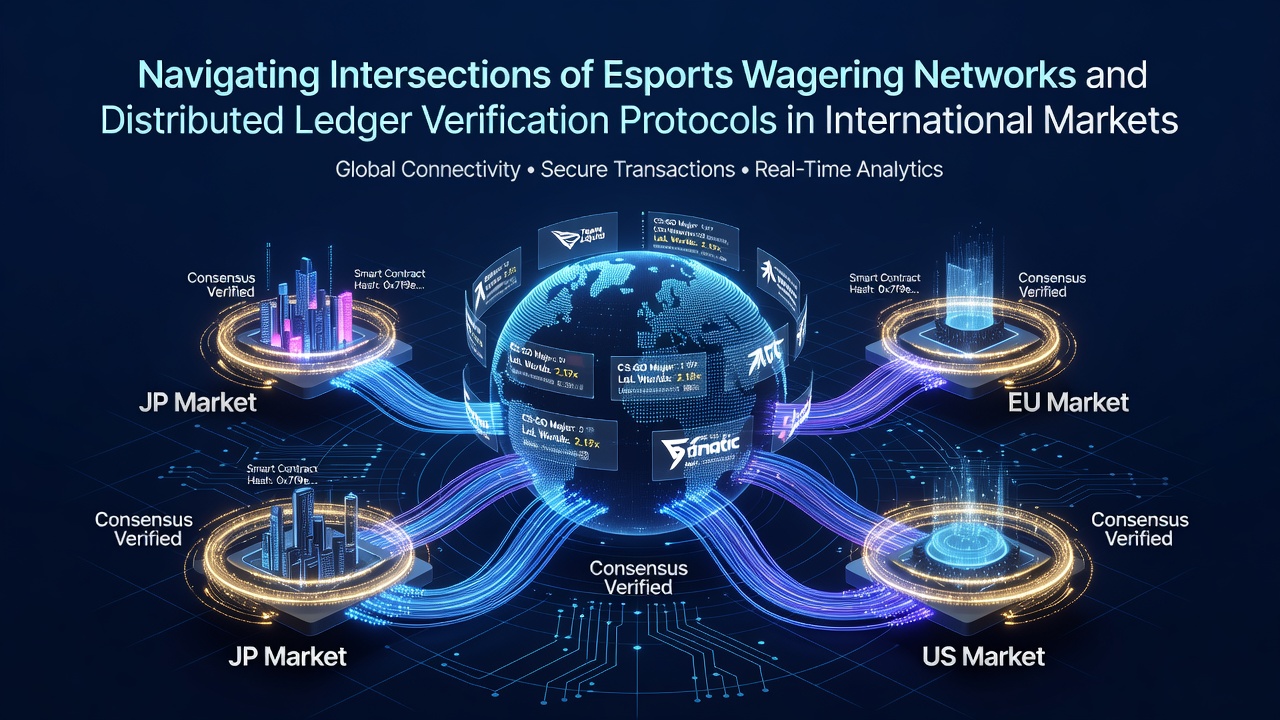
Esports wagering networks have expanded rapidly in multiple jurisdictions since 2020, and distributed ledger verification protocols now form a core component of transaction processing in several markets. Operators deploy these systems to record bets, confirm outcomes, and maintain audit trails without relying on centralized databases. Data from industry tracking services shows that platforms handling esports titles such as League of Legends and Counter-Strike recorded over 12 billion dollars in handle during 2025, with a growing share processed through blockchain-based ledgers.
Core Technical Components
Distributed ledger systems used in esports betting rely on smart contracts that execute automatically once predefined conditions are met. These contracts store bet details, match results, and payout instructions on immutable chains, which reduces disputes between users and operators. Multiple nodes validate each transaction before it is added to the ledger, and consensus mechanisms such as proof-of-stake ensure network integrity across different geographic regions. Observers note that this structure allows platforms to operate in jurisdictions with varying data-protection rules because records remain accessible yet tamper-resistant.
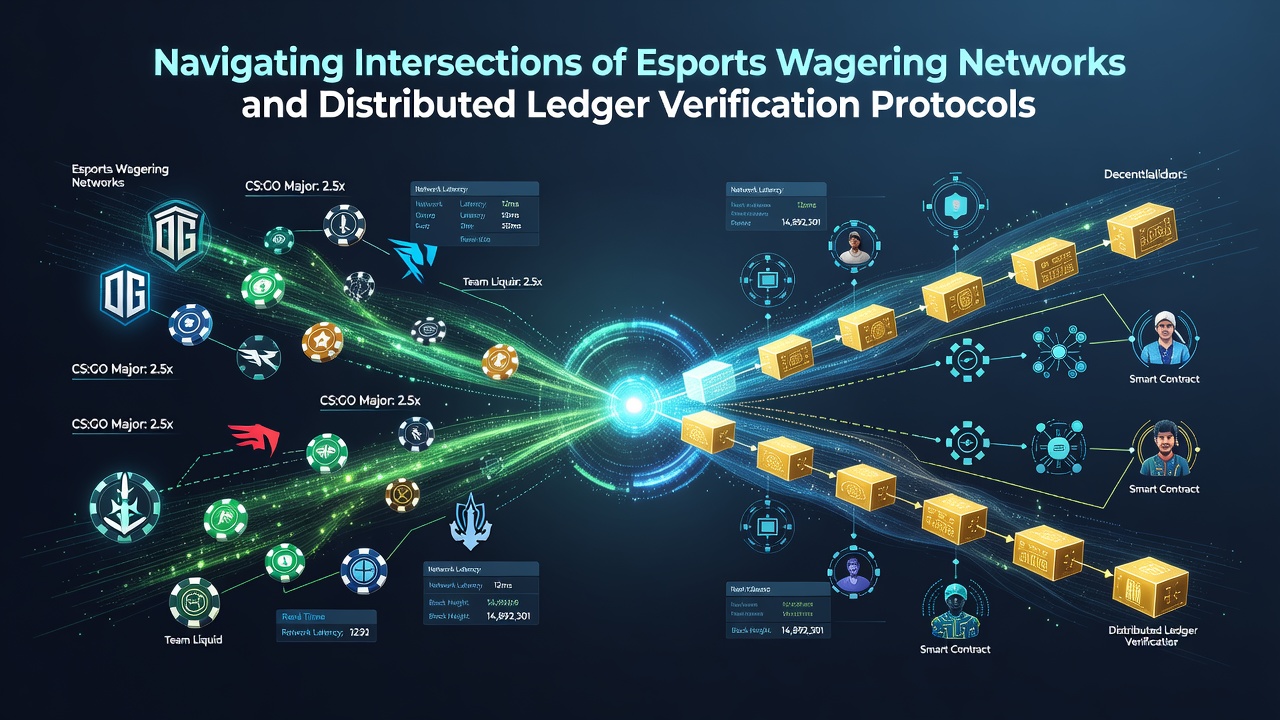
Verification protocols also incorporate oracles that feed real-time match data from esports organizers into the blockchain. When a tournament concludes, the oracle transmits results to the smart contract, which then settles wagers without manual intervention. Research indicates that latency reductions of up to 40 percent have been measured in networks employing optimized oracle feeds compared with traditional API-based settlement methods.
Regulatory Landscape in Key Regions
European markets present a patchwork of approaches to blockchain verification in gambling. Malta has issued guidance permitting licensed operators to use distributed ledgers for transaction logging provided that customer funds remain segregated under traditional banking rules. In contrast, several Nordic countries require that all betting ledgers be mirrored on servers located within their borders, which forces operators to maintain hybrid architectures. Data released by the European Gaming and Betting Association in early 2026 shows that seven member states now accept blockchain-derived audit reports during licensing renewals.
Asia-Pacific jurisdictions have moved at different speeds. Australia’s state regulators have piloted sandbox programs that test blockchain settlement for esports events, while Singapore maintains a prohibition on unlicensed remote betting regardless of the underlying technology. In Latin America, Brazil’s 2024 gaming law opened the door for licensed platforms, and several operators have begun testing ledger-based verification to comply with forthcoming tax-reporting mandates scheduled for implementation in late 2026.
Implementation Examples
One platform operating under a Curaçao license began recording Counter-Strike tournament bets on a permissioned blockchain in March 2025. The system reduced average payout times from 48 hours to under four hours, according to the operator’s quarterly transparency report. A separate service licensed in the Isle of Man integrated a public ledger for user-facing bet receipts while keeping internal risk-management data on a private chain, satisfying both player transparency demands and regulatory confidentiality requirements.
Academic researchers at a European university published findings in May 2026 that examined 2.3 million esports wagers processed across three different ledger protocols. The study documented a 17 percent decline in chargeback rates among users who received blockchain receipts compared with those using conventional confirmation emails. Those results have prompted additional operators to explore similar hybrid receipt systems ahead of the summer esports calendar that peaks in June and July.
Operational Challenges
Cross-border data transfer remains a persistent issue because some countries classify blockchain records as personal data subject to localization rules. Operators must therefore segment ledgers so that user identifiers stay within permitted jurisdictions while transaction hashes travel freely. Scalability also presents difficulties when major tournaments generate sudden spikes in betting volume; networks using proof-of-work variants have experienced temporary congestion during peak events.
Interoperability between different ledger standards further complicates integration. Platforms that accept bets from users in multiple countries must ensure that verification protocols remain compatible with each jurisdiction’s reporting format. Industry working groups have begun developing common schemas for esports outcome data, yet adoption remains uneven as of June 2026.
Conclusion
Distributed ledger verification continues to gain traction within esports wagering networks operating across international markets. Regulatory acceptance varies by region, technical implementations differ in architecture, and operational hurdles such as data localization and scalability persist. Market participants continue to refine these systems in response to evolving compliance requirements adn user expectations for faster, transparent settlement.